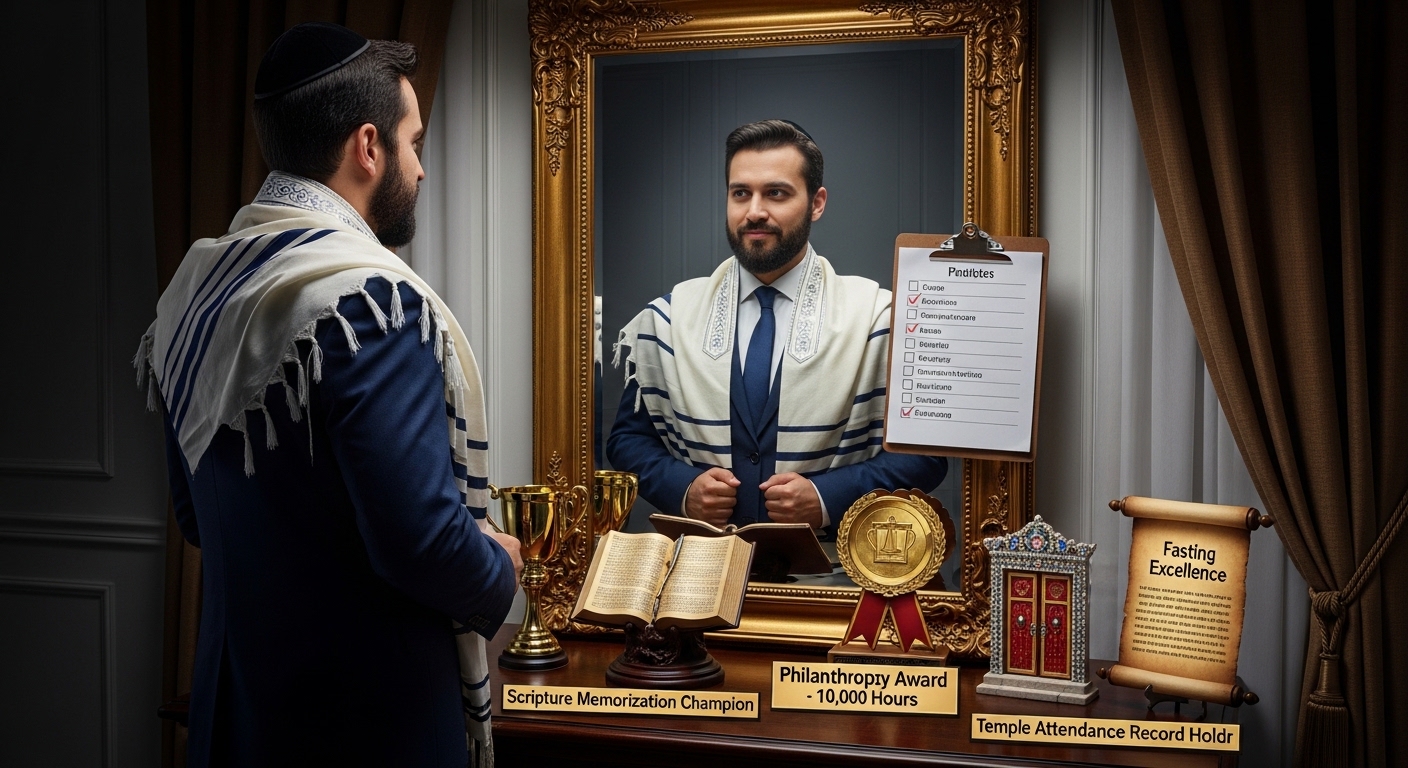
You want authentic spiritual growth and freedom to discover who you truly are. But you’ve encountered the problem modern self-discovery movements promise liberation while producing subtle pride disguised as enlightenment.
You need wisdom, recognizing Pharisaical glorified self discovery, the dangerous fusion of religious language with self-exaltation that Jesus condemned repeatedly.
Scripture becomes your guide, exposing how “finding yourself” can masquerade as spiritual pride.
We will examine what Pharisaical truly means, understand the pitfalls of modern self-discovery, and discover a Christ-centered identity that transcends both legalism and narcissism.
You will also learn whether your identity journey glorifies God or self. Without proper understanding, spiritual self-discovery becomes sophisticated self-worship wrapped in religious vocabulary.
But what Jesus revealed about the Pharisees’ self-righteous identity could expose subtle pride lurking in contemporary Christian self-discovery movements.
What Does “Pharisaical” Mean Biblically?
The term “Pharisaical” describes religious hypocrisy, legalism, and self-righteousness characterizing the Pharisees whom Jesus confronted throughout His earthly ministry.
Outward Compliance – Pharisees meticulously observed religious laws externally—tithing mint, dill, and cumin (Matthew 23:23)—while neglecting justice, mercy, and faithfulness.
They prioritized visible obedience, creating a public perception of righteousness while hearts remained far from God.
External performance substituted for internal transformation, producing “whitewashed tombs” (Matthew 23:27)—beautiful outside, dead inside.
Inward Pride – Luke 18:11-12 records the Pharisee praying, “God, I thank you that I am not like other people—robbers, evildoers, adulterers—or even like this tax collector.
I fast twice a week and give a tenth of all I get.” This prayer reveals pride’s essence, comparing oneself favorably to others, cataloging personal righteousness, and assuming spiritual superiority.
Performance-Based Righteousness – Pharisees believed their rigorous law-keeping earned God’s favor and distinguished them from “sinners.”
This performance-based approach contradicts grace, producing burdensome religion without transformative power.
They trusted their own righteousness rather than receiving God’s righteousness as a gift through faith.
What Is Pharisaical Glorified Self Discovery?

Pharisaical glorified self discovery represents the contemporary phenomenon where self-exploration and identity affirmation operate under Christian vocabulary while producing self-exaltation rather than Christ-exaltation.
It mirrors Pharisees’ pattern of outward religious conformity, masking inward pride, but replaces legalistic rule-keeping with therapeutic self-focus.
This approach encourages discovering inner truth, affirming personal identity, and celebrating self as primary spiritual objectives, subtly positioning self rather than Christ as central.
Like Pharisees who appeared righteous externally while harboring pride internally, modern Pharisaical self-discovery uses Christian language (“God made me unique,” “authentic self”) while fostering self-glorification disguised as spiritual growth.
It divorces identity from repentance, transformation, and dying to self, instead celebrating self as inherently good, requiring only discovery and affirmation.
This creates spiritual narcissism—obsession with personal identity, feelings, and self-actualization—while maintaining religious appearance.
The Pharisees glorified themselves through moral superiority; modern versions glorify self through identity celebration, authenticity claims, and self-validation, both contradicting Scripture’s call to lose life to find it (Matthew 16:25) and find identity exclusively in Christ rather than self-exploration or self-affirmation independent of gospel transformation.
What Does the Bible Say About Self Discovery?
Scripture warns against self-focused spirituality while emphasizing that true identity comes through dying to self and finding life in Christ.
Jeremiah 17:9 declares, “The heart is deceitful above all things and beyond cure. Who can understand it?”—contradicting modern assumptions that looking within reveals truth.
Proverbs 14:12 warns, “There is a way that appears right to a man, but in the end it leads to death,” cautioning against trusting personal insight over divine revelation.
Matthew 16:24-25 teaches, “Whoever wants to be my disciple must deny themselves and take up their cross and follow me.
For whoever wants to save their life will lose it, but whoever loses their life for me will find it.” Biblical spirituality moves outward toward God and others, not inward toward self.
Galatians 2:20 declares, “I have been crucified with Christ, and I no longer live, but Christ lives in me”—identity through death to self, not self-discovery.
Scripture never commands introspective self-exploration but rather knowing God (Jeremiah 9:23-24), being transformed by mind renewal (Romans 12:2), and understanding the believer’s identity in Christ through union with Him.
Biblical identity formation happens through gospel transformation, not self-actualization.
Were Pharisees Self-Righteous?
Yes, the Pharisees epitomized self-righteousness, trusting their own righteousness rather than receiving God’s righteousness through faith.
Luke 18:9 introduces the parable of the Pharisee and tax collector by noting Jesus spoke: “to some who were confident of their own righteousness and looked down on everyone else.”
The Pharisee’s prayer (Luke 18:11-12) catalogs his religious achievements, contrasting himself favorably with sinners, demonstrating textbook self-righteousness.
Romans 10:3 describes Israel’s condition: “Since they did not know the righteousness of God and sought to establish their own, they did not submit to God’s righteousness.”
This precisely characterizes Pharisaical religion, establishing personal righteousness through performance rather than receiving God’s righteousness through faith.
Philippians 3:4-6 records Paul’s pre-conversion Pharisaical self-righteousness: “If someone else thinks they have reasons to put confidence in the flesh, I have more: circumcised on the eighth day…a Hebrew of Hebrews; regarding the law, a Pharisee…as for righteousness based on the law, faultless.”
Yet Paul counted this rubbish (v. 8), recognizing that true righteousness comes through faith in Christ, not self-generated religious performance or identity affirmation.
How Did the Pharisees See Themselves?
The Pharisees viewed themselves as spiritually superior, an elite God’s faithful remnant distinguished from sinful masses through rigorous law-keeping and religious knowledge.
Spiritual Elite – Pharisees considered themselves keepers of true faith, interpreting and applying God’s law correctly while common people remained ignorant.
John 7:49 records their contempt: “This mob that knows nothing of the law—there is a curse on them.” They positioned themselves as spiritual authorities whose knowledge and observance elevated them above ordinary believers.
Separate and Holy – The name “Pharisee” likely derives from Hebrew perushim (separated ones). They meticulously avoided ceremonial defilement, separating from “sinners” to maintain purity.
This separation produced pride rather than holiness—they congratulated themselves for avoiding sinners rather than humbly recognizing shared need for grace.
Righteous Before God – Pharisees genuinely believed their law-keeping made them righteous before God. They trusted that moral performance, religious knowledge, and behavioral compliance secured divine favor.
This confidence in personal righteousness prevented recognizing the need for a Savior—they came not to call the righteous but sinners (Matthew 9:13).
Morally Superior – Pharisees constantly compared themselves favorably to others—tax collectors, prostitutes, Gentiles, common Jews.
This comparative righteousness produced judgmental attitudes and contempt for those failing their standards. They missed that God’s standard is perfection, rendering all comparative righteousness meaningless.
What Is a Pharisee Mindset? (The Pharisee Spirit)
The Pharisee mindset represents an enduring spiritual attitude transcending historical Pharisees, manifesting wherever religious performance and self-righteousness replace grace and humility.
Performance-Based Acceptance – The Pharisee spirit believes acceptance comes through achievement—moral performance, religious activity, or spiritual knowledge earns God’s favor and others’ respect.
This produces exhausting religion where worth depends on doing rather than being, performance rather than grace, earning rather than receiving.
Comparative Righteousness – Pharisee mentality constantly measures self against others, finding security in being “better than”—more moral, more spiritual, more orthodox, more disciplined.
This comparative approach misses an absolute standard requiring perfection, rendering all human righteousness inadequate (Isaiah 64:6).
Judgmental Superiority – Pharisee spirit produces harsh judgment toward those perceived as less righteous, spiritual, or obedient.
It lacks mercy, grace, and compassion, viewing others’ failures as evidence of inferiority rather than shared human brokenness.
This judgmentalism contradicts Jesus’ command to remove logs from one’s own eyes before addressing others’ specks (Matthew 7:3-5).
External Focus – Pharisaical thinking emphasizes visible obedience—what others see—while neglecting heart transformation.
It produces religious performance without genuine love for God or others. Jesus repeatedly confronted this externalism: “You clean the outside of the cup and dish, but inside they are full of greed and self-indulgence” (Matthew 23:25).
Self-Trust – Ultimately, the Pharisee mindset trusts oneself in one’s righteousness, wisdom, or spiritual achievement rather than trusting God’s grace.
This self-reliance, whether expressed through legalistic rule-keeping or therapeutic self-discovery, replaces God-dependence with self-sufficiency, producing pride disguised as spirituality.
The Characteristics of a Pharisee
Identifying Pharisaical characteristics helps recognize this spiritual disease in others and, more importantly, in ourselves before it destroys authentic faith.
Legalism – Pharisees added human traditions to God’s law, binding consciences with extrabiblical rules.
Mark 7:8-9 records Jesus confronting them: “You have let go of the commands of God and are holding on to human traditions…You have a fine way of setting aside the commands of God to observe your own traditions!”
Modern Pharisaism similarly elevates preferences, traditions, or cultural standards to biblical authority.
Hypocrisy – Matthew 23:3 warns, “They do not practice what they preach.” Pharisees demanded standards from others they didn’t maintain themselves, creating public righteousness masking private sin.
Jesus called them “hypocrites” repeatedly (Matthew 23:13, 15, 23, 25, 27, 29), exposing incongruence between profession and practice.
Pride – Proverbs 16:18 warns, “Pride goes before destruction, a haughty spirit before a fall.” Pharisaical pride manifested in spiritual superiority, disdain for “sinners,” and confidence in personal righteousness.
This pride prevented them from recognizing Jesus as Messiah—they couldn’t admit needing a Savior when convinced of self-sufficiency.
Lack of Mercy – Pharisees emphasized justice and law-keeping while neglecting mercy, compassion, and grace.
Matthew 23:23 charges them with neglecting “the more important matters of the law—justice, mercy, and faithfulness.” Their religion produced harshness, not compassion; judgment, not grace; condemnation, not restoration.
Love of Recognition – Matthew 23:5-7 exposes their craving for public recognition: “Everything they do is done for people to see…they love the place of honor at banquets and the most important seats in the synagogues; they love to be greeted with respect in the marketplaces and to be called ‘Rabbi’ by others.” They performed righteousness for human applause rather than God’s glory.
Blindness to Own Sin – Perhaps most dangerously, Pharisees couldn’t see their own sinfulness. They identified others’ sins readily while remaining blind to pride, hypocrisy, and hardheartedness.
This spiritual blindness prevented repentance; they saw no need for forgiveness when convinced of personal righteousness.
What Is Modern Self-Discovery?
Contemporary self-discovery movements emphasize introspection, identity exploration, and self-actualization as paths to fulfillment, often incorporating therapeutic and spiritual language.
Self-Actualization – Drawing from humanistic psychology (Maslow’s hierarchy), modern self-discovery teaches that fulfillment comes through realizing potential, expressing the authentic self, and achieving personal growth.
This framework positions self-realization as life’s ultimate goal, subtly replacing God-glorification with self-fulfillment as existence’s purpose.
Inner Truth Narrative – Self-discovery assumes truth resides within—individuals must look inward to discover identity, purpose, and meaning.
This contradicts biblical epistemology, teaching that truth comes through divine revelation, not human introspection. “Your truth” replaces objective truth, making personal feelings and experiences the ultimate authority.
Self-Validation – Modern self-discovery emphasizes affirming and celebrating personal identity, feelings, and experiences without external judgment or correction.
This produces therapeutic spirituality where affirming the self takes precedence over conforming to Christ. Self-acceptance replaces repentance; self-love supersedes dying to self.
When Self-Discovery Becomes Self-Glorification
Seemingly innocent self-exploration crosses into self-glorification when identity formation centers on self rather than Christ, celebration replaces transformation, and personal feelings trump biblical truth.
Identity Detached from Repentance – When self-discovery focuses on affirming current identity without acknowledging sin, brokenness, or need for transformation, it becomes self-glorification.
Biblical identity formation begins with repentance, recognizing sinfulness, turning from self, and receiving a new identity in Christ.
Self-discovery bypassing repentance celebrates the fallen self rather than the redeemed self.
Celebration Without Transformation – Modern self-discovery often emphasizes celebrating “who you are” without a corresponding call to “become who God created you to be through transformation.”
This produces self-congratulation rather than sanctification. Biblical spirituality celebrates what God is doing (transformation) rather than what we inherently are (sinners saved by grace).
Self as Moral Authority – When personal feelings, experiences, or identity claims supersede biblical teaching, self-discovery becomes self-glorification.
“This is my truth” or “God made me this way” function as conversation-enders, preventing biblical correction.
Self becomes interpreter of Scripture rather than Scripture interpreting self, reversing proper authority structure.
The Pharisaical Pattern in Self-Exaltation
Contemporary self-glorification mirrors Pharisees’ self-exaltation, replacing legalistic performance with therapeutic self-focus while maintaining identical pride structure.
Comparing Self to Others – Modern versions compare authenticity, self-awareness, or progressive values rather than law-keeping.
“I’m more authentic than religious hypocrites” functions identically to “I’m not like other sinners” (Luke 18:11).
Both derive worth from favorable comparison, producing the same prideful superiority Jesus condemned.
Public Righteousness – Pharisees performed righteousness publicly for recognition; modern equivalents perform authenticity, vulnerability, or progressive values publicly on social media.
“Look how self-aware I am,” or “Look how I’ve embraced my true self,” seek validation just as Pharisees sought recognition for visible piety.
Spiritual Superiority – Ancient Pharisees claimed superiority through law-keeping; contemporary versions claim superiority through emotional intelligence, authenticity, or enlightenment.
Both positions stand above others one through moral performance, the other through self-actualization—producing identical pride wearing different clothing.
Who Are the Pharisees and Sadducees Today?
While no direct organizational equivalents exist, Pharisaical and Sadducean spirits manifest in contemporary religious contexts through similar attitudes and behaviors.
Modern Pharisees – Contemporary Pharisees emphasize doctrinal purity, behavioral standards, and religious tradition while lacking grace, mercy, and authentic transformation.
They appear in fundamentalist circles, policing orthodoxy harshly, but also progressive circles, policing authenticity and inclusivity judgmentally.
Any religious person trusting performance (moral, intellectual, or therapeutic) over grace manifests a Pharisaical spirit.
Modern Sadducees – Sadducees denied supernatural elements (resurrection, angels, spirits), accommodated Roman culture, and emphasized political power over spiritual faithfulness.
Contemporary equivalents include religious liberals denying biblical supernaturalism, accommodating secular culture uncritically, and prioritizing institutional power or cultural relevance over doctrinal faithfulness.
They adapt Christianity to contemporary culture rather than confronting culture with gospel truth.
Self-Discovery Pharisees – Perhaps most subtly, therapeutic Christianity emphasizing self-discovery, personal fulfillment, and identity affirmation while neglecting sin, repentance, and cross-bearing represents new Pharisaism.
These modern Pharisees trust psychological insight over biblical wisdom, celebrate self over Christ, and position personal feelings as ultimate authority—producing self-glorification disguised as spiritual growth.
Shared Pride – Whether legalistic rule-keepers, progressive inclusivity police, or therapeutic self-actualizers, all Pharisaical expressions share core pride, trusting something about self (morality, authenticity, enlightenment) rather than trusting Christ alone.
The specific focus varies; the underlying self-trust remains constant.
Biblical Righteousness vs Self-Righteous Identity
Understanding the radical difference between biblical righteousness and self-righteousness protects against both legalistic and therapeutic versions of self-glorification.
Imputed or Gifted Righteousness – Biblical righteousness is Christ’s righteousness credited to believers through faith, not generated through performance or discovered through introspection.
Romans 4:5 declares, “However, to the one who does not work but trusts God who justifies the ungodly, their faith is credited as righteousness.” Righteousness is received, not achieved or discovered.
Repentance and Humility – Biblical identity begins with repentance, acknowledging sinfulness, spiritual bankruptcy, and absolute dependence on God’s mercy.
Matthew 5:3 pronounces blessing on “the poor in spirit”—those recognizing spiritual poverty. This contradicts self-discovery’s affirmation of inherent goodness requiring only recognition and celebration.
Transformation Through Grace – Biblical righteousness produces progressive transformation—becoming like Christ through the Spirit’s work, not self-effort or self-discovery.
2 Corinthians 3:18 describes believers “being transformed into his image with ever-increasing glory, which comes from the Lord, who is the Spirit.”
Transformation happens through grace working in response to faith, not through autonomous self-actualization.
The Antidote: Christ-Centered Identity
The solution to Pharisaical glorified self-discovery isn’t legalism or asceticism but Christ-centered identity rooted in gospel grace and union with Christ.
Die to Self – Jesus commands, “Whoever wants to be my disciple must deny themselves and take up their cross and follow me” (Matthew 16:24).
Christian life begins with self-denial, not self-discovery; dying to self, not finding self. This death isn’t self-hatred but recognizing that autonomous self-focused existence leads to death, while losing life for Christ produces true life.
Find Identity in Christ – Galatians 2:20 declares the Christian’s true identity: “I have been crucified with Christ, and I no longer live, but Christ lives in me.
The life I now live in the body, I live by faith in the Son of God, who loved me and gave himself for me.” Identity comes through union with Christ—what He is, believers become through grace.
God Glorified, Not Self – 1 Corinthians 10:31 establishes life’s purpose: “So whether you eat or drink or whatever you do, do it all for the glory of God.”
Life’s goal isn’t self-actualization, self-discovery, or self-expression but God-glorification. When God receives glory through transformed lives reflecting Christ, believers experience fulfillment transcending self-focused alternatives.
Humility as Foundation – Philippians 2:3 commands, “Do nothing out of selfish ambition or vain conceit. Rather, in humility value others above yourselves.”
Biblical spirituality produces humility, recognizing that everything good comes from God, not self. This humility prevents both legalistic pride in performance and therapeutic pride in authenticity.
Grace as Power – 2 Corinthians 12:9 declares, “My grace is sufficient for you, for my power is made perfect in weakness.”
Biblical Christianity boasts in weakness, not strength; dependence, not autonomy; grace received, not self-generated.
This contradicts both Pharisaical self-righteousness through performance and contemporary self-glorification through self-discovery.
Conclusion
Pharisaical glorified self discovery represents the contemporary fusion of religious vocabulary with self-exaltation, producing spiritual narcissism disguised as authentic Christianity.
Like ancient Pharisees who trusted their own righteousness through law-keeping, modern versions trust self-discovery, authenticity, and personal identity affirmation while neglecting repentance, transformation, and dying to self.
This therapeutic spirituality uses Christian language while centering the self rather than Christ, celebration rather than sanctification, and self-validation rather than gospel transformation.
The antidote isn’t legalism but Christ-centered identity found through dying to self, receiving righteousness as a gift through faith, and living for God’s glory rather than self-actualization.
Jesus repeatedly confronted Pharisaical pride in His day; contemporary believers must recognize similar pride wearing therapeutic clothing in ours.
True freedom comes not through discovering self but through losing self in Christ, finding identity exclusively in union with Him rather than introspective self-exploration or self-affirmation independent of gospel grace, transforming sinners into saints.

My passion lies in reaching out to young adults in communities and schools, witnessing the transformative power of faith in their lives.
This blog extends my ministry, sharing insights, encouraging believers, and exploring Christ's teachings in daily life.
Welcome, Brother James.
- What Does the Bible Say About Culture and Traditions? - March 16, 2026
- Scriptural Prayers for Pastors and Leaders - March 16, 2026
- 100 Prosperity Scriptures - March 16, 2026