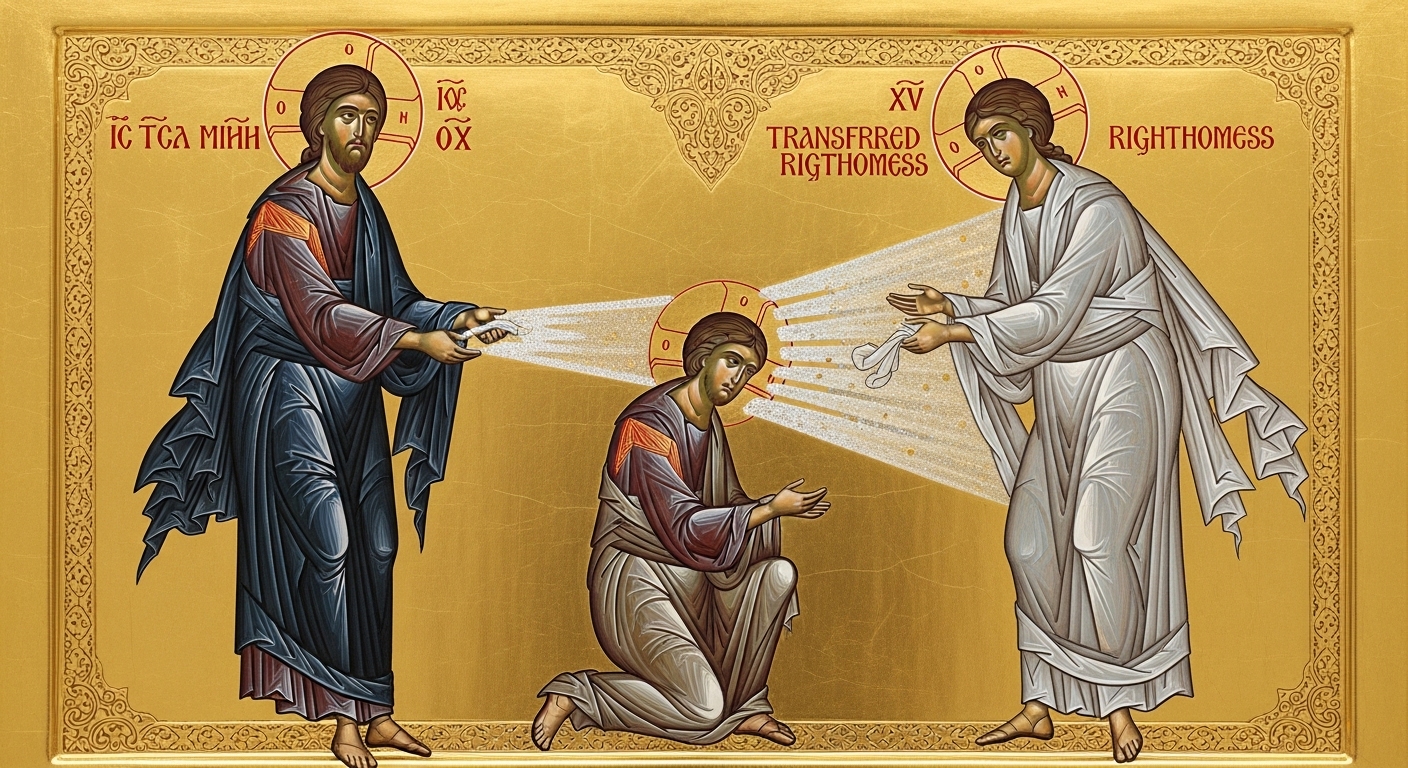
You want to understand how salvation works, specifically how God makes sinners righteous before Him.
But you’ve encountered the problem of conflicting theological explanations, leaving you confused about justification, imputation, and transformation.
You need clarity on how does God impute his righteousness to us in Orthodoxy?
Today, we will look carefully into the Orthodox theology view of Justification and how it is different from other Western legal categories, but what is important is that in the end, we will draw our bias from what the word of God says about “imputed righteousness“.
What Does “Impute” Mean in Theology?
The term “imputation” carries a specific theological meaning, particularly within Western Christian traditions, though its usage and interpretation vary significantly across denominational boundaries.
Forensic Understanding – “Impute” (Greek logizomai) means “to reckon,” “to credit,” or “to account.”
In Western theology, particularly Reformed Protestant thought, imputation refers to God legally crediting Christ’s righteousness to believers’ accounts.
This forensic metaphor views justification as a courtroom declaration where God declares sinners righteous based on Christ’s transferred merit, not inherent righteousness.
Western Theological Development – Imputation theology developed extensively during the Reformation debates between Protestants and Catholics.
Reformers emphasised righteousness as alien (external), imputed through faith alone, contrasting Catholic views of infused righteousness through sacramental grace.
This distinction became central to Protestant-Catholic divisions, continuing today.
Scriptural Background – Romans 4:3-6 discusses Abraham’s faith being “credited as righteousness,” using accounting language suggesting legal reckoning.
However, Orthodox theology questions whether this Western legal framework accurately captures biblical and patristic understanding of salvation as participation in divine life transformatively.
How Does God Impute His Righteousness to Us Orthodoxy?
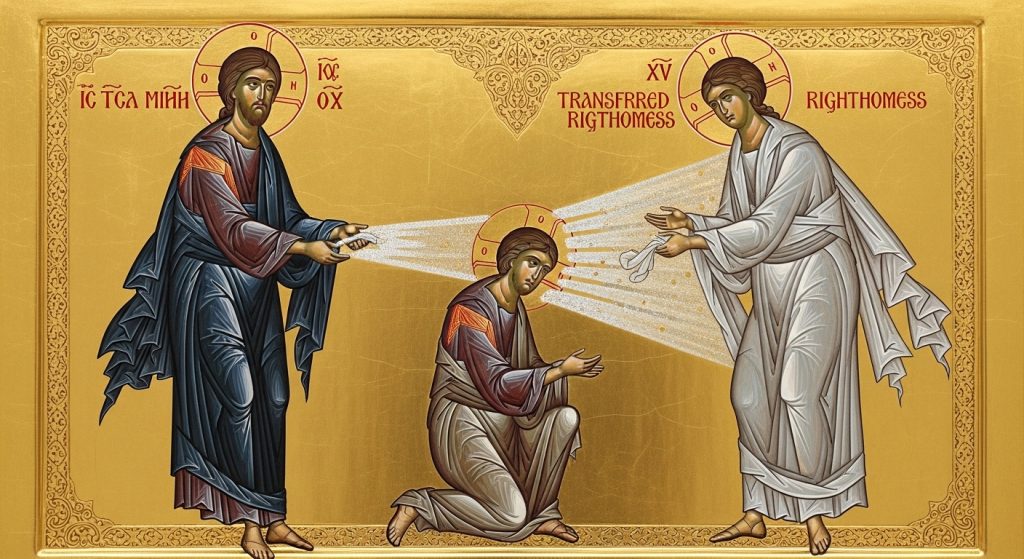
Eastern Orthodox theology fundamentally rejects the Western forensic imputation framework, viewing righteousness not as externally credited legal status but as participation in God’s divine life through union with Christ.
Orthodoxy teaches that God doesn’t merely declare believers righteous while they remain unchanged; instead, He makes them actually righteous through transformative participation in divine energies.
This process, called theosis (divinization), involves believers becoming “partakers of the divine nature” (2 Peter 1:4) through sacramental life, faith, and ascetic cooperation with grace.
Rather than imputation (external reckoning), Orthodoxy emphasises impartation. God genuinely shares His righteousness through mystical union with Christ in the Church, the Body of Christ.
Righteousness isn’t an alien legal fiction but a real ontological transformation as the Holy Spirit indwells believers, healing sin’s corruption and restoring the divine image.
Salvation functions therapeutically, Christ, as physician heals sin’s disease, progressively transforming believers into His likeness through synergy (cooperation between divine grace and human response).
To learn more about righteousness, see our biblical exposition on the difference between imputed and infused righteousness, which fundamentally differs from Protestant forensic categories.
The Orthodox Understanding of Righteousness
Orthodox theology views righteousness not primarily as legal status but as participation in God’s divine life, representing ontological reality rather than merely juridical declaration.
Righteousness as Participation – For Orthodoxy, righteousness means sharing in God’s own righteousness through union with Christ.
Believers don’t receive righteousness externally credited while remaining internally corrupt; they’re transformed into righteousness through genuine participation in divine nature.
2 Peter 1:4 forms a theological foundation: “partakers of the divine nature,” suggesting real transformation, not legal fiction.
Not Merely External Declaration – Orthodox theology rejects the notion that God declares sinners righteous while they remain unchanged.
This would constitute a divine lie, calling something what it isn’t. Instead, God’s declaration accompanies and enables actual transformation. When God says someone is righteous, His word creates that reality ontologically.
Communion with God – Righteousness flows from restored communion with God through Christ. Sin separates; salvation reconnects.
Righteousness isn’t abstract legal status but relational reality experienced through sacramental life, prayer, and participation in the Church’s corporate worship.
Communion produces transformation as believers encounter the living God.
How Does God Impute Righteousness?
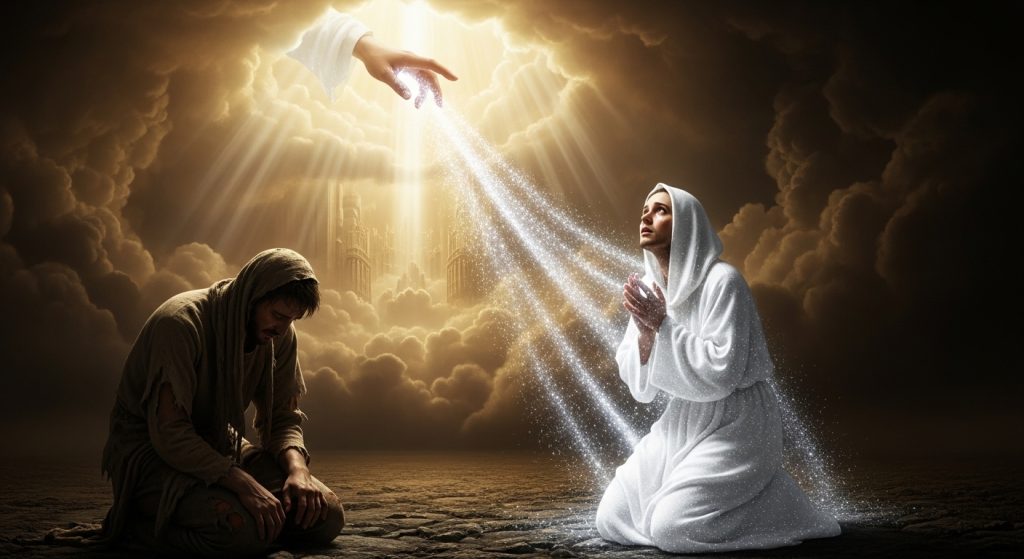
From an Orthodox perspective, God doesn’t “impute” righteousness in the Western forensic sense but imparts it through transformative union with Christ.
God makes believers righteous by genuinely sharing His divine life through the Holy Spirit dwelling within them.
This happens primarily through baptism (dying and rising with Christ), Chrismation (receiving the Holy Spirit), and ongoing participation in the Eucharist (communion with Christ’s body and blood).
These sacraments aren’t mere symbols but real encounters with divine grace, affecting transformation.
Righteousness grows progressively as believers cooperate with grace through faith, repentance, prayer, and ascetic discipline.
Unlike the Protestant understanding, where righteousness is instantaneously imputed at conversion, Orthodoxy sees righteousness as a lifelong process of healing and transformation.
God doesn’t credit external righteousness, leaving believers unchanged; He heals their corrupted nature, progressively restoring the divine image damaged by sin.
This therapeutic model views salvation as ongoing restoration rather than a one-time legal transaction.
Justification as Healing and Restoration
Orthodox theology employs therapeutic metaphors for salvation, viewing sin as a disease requiring healing rather than primarily legal guilt requiring pardon or credit transfer.
Sin as Disease – Orthodoxy understands sin primarily as corruption, sickness, and death affecting human nature comprehensively.
Sin isn’t just a legal transgression but ontological corruption, damaging humanity’s capacity for communion with God.
This disease model shapes how Orthodoxy understands righteousness as healing and restoration rather than legal acquittal.
Christ as Physician – Jesus functions as the divine physician healing sin’s disease. His incarnation, death, and resurrection provide medicine curing humanity’s fatal illness.
Salvation means receiving this cure through union with Christ, not merely avoiding legal penalty. The Church functions as a hospital where healing occurs progressively.
Righteousness as Healing – From this perspective, righteousness represents restored health—healed human nature capable of communion with God.
God doesn’t declare sick people healthy while leaving them diseased; He actually heals them. Justification and sanctification aren’t separate forensic from transformative stages, but a unified healing process restoring the divine image.
How Did God Demonstrate His Righteousness to Us?
God demonstrated His righteousness supremely through Christ’s incarnation, death, and resurrection—not primarily as legal payment satisfying divine justice (though Orthodox theology doesn’t entirely reject substitutionary elements), but as victory over sin, death, and the devil.
Romans 3:25-26 describes God demonstrating righteousness through Christ’s sacrifice, which Orthodox theology interprets as revealing God’s faithful love and power to save rather than primarily as a legal transaction.
Christ’s righteousness was demonstrated through His perfect obedience, sinless life, and triumph over death.
The resurrection particularly reveals God’s righteousness—His power to restore corrupted humanity to divine communion.
God demonstrates righteousness by actually making humans righteous through union with Christ rather than merely crediting them with legal status.
The Cross reveals both divine love and divine power to transform. God doesn’t abandon humanity to corruption but enters creation personally, uniting divine and human natures in Christ, healing humanity from within.
Theosis: Becoming Partakers of the Divine Nature
Theosis (divinization) represents Orthodox theology’s central soteriological concept, describing salvation as participation in divine life rather than merely legal status change.
Participation in Divine Energies – Orthodox theology distinguishes God’s essence (unknowable) from His energies (how He relates to creation).
Theosis means participating in divine energies—God’s grace, light, and life—without becoming God in essence.
This participation makes believers genuinely righteous through a real connection with divine righteousness, not a fictional legal transfer.
Transformation of the Person – Theosis involves complete personal transformation, body, soul, and spirit renewed through divine grace.
This isn’t self-improvement but divine intervention, healing corrupted human nature. Believers gradually become “by grace what God is by nature,” participating in divine attributes like love, holiness, and immortality.
Union with Christ – Theosis occurs through mystical union with Christ, particularly in the Eucharist. As believers consume Christ’s body and blood, they’re united with Him ontologically.
This union transforms them progressively into His likeness. Galatians 2:20—”I no longer live, but Christ lives in me”, describes this transformative indwelling central to Orthodox soteriology.
When God Imputes Righteousness Apart from Works?
Orthodox theology interprets Romans 4 (Abraham’s faith credited as righteousness) differently from Protestant forensic frameworks.
While acknowledging Paul’s teaching that righteousness comes through faith, not legal works, Orthodoxy doesn’t understand this as external legal credit.
Instead, faith itself represents participation in divine life; it’s not mere intellectual assent but a transformative relationship with God.
“Apart from works” means righteousness doesn’t come through human effort or legal observance (circumcision, dietary laws) but through grace-enabled participation in God’s life.
However, this participation isn’t passive; it requires active cooperation (synergy) with grace through faith expressing itself in love (Galatians 5:6).
Orthodoxy rejects both salvation by works (Pelagianism) and passive reception of external righteousness (as Orthodox interprets Reformed theology).
Abraham’s faith was credited as righteousness because faith united him with God, enabling transformation.
This wasn’t legal fiction but a real connection producing genuine righteousness progressively. You can read our bible study on Protestant vs. Catholic views on justification for comparative perspectives.
Synergy: Cooperation with Divine Grace
Orthodox theology emphasises synergy cooperation between divine grace and human response, rejecting both Pelagian works-righteousness and monergistic grace, eliminating human participation.
Faith – Faith isn’t passive intellectual acceptance but active trust involving the entire person. It represents saying “yes” to God’s grace, opening oneself to divine transformation.
Faith makes righteousness possible not by earning it but by enabling reception through willing cooperation with grace.
Repentance – Ongoing repentance (Greek metanoia—change of mind) forms essential cooperation with grace.
As believers recognize sin and turn toward God repeatedly, healing occurs progressively. Repentance isn’t a one-time event but a lifelong posture enabling continued transformation toward righteousness.
Sacramental Life – Active participation in sacraments—baptism, chrismation, confession, Eucharist—constitutes primary cooperation with grace.
These aren’t mere symbols but real encounters with divine grace affecting transformation. Regular Eucharistic participation particularly enables ongoing union with Christ, producing righteousness.
Ascetic Discipline – Prayer, fasting, and spiritual discipline represent cooperation enabling grace’s transformative work.
These practices don’t earn righteousness but create conditions where healing occurs. Like a patient following a doctor’s orders, believers cooperate with Christ the Physician through disciplined spiritual life.
How Does Imputed Righteousness Make Peace with God Possible?
From an Orthodox perspective, the question itself contains Western assumptions needing reframing. Peace with God isn’t possible through external legal imputation but through restored communion in Christ.
Romans 5:1—”Since we have been justified through faith, we have peace with God”—describes real relational reconciliation, not merely legal status change.
Peace comes through Christ uniting divine and human natures, bridging the ontological gap that sin created.
When believers participate in Christ through baptism and Eucharist, they’re united with Him who is both God and man, experiencing genuine peace through a restored relationship.
This peace isn’t based on legal fiction (God pretending sinners are righteous) but on actual transformation, making real communion possible.
Sin’s corruption separated humanity from the holy God; Christ’s healing removes separation, enabling genuine fellowship.
Peace flows from ontological healing rather than legal reckoning. God doesn’t merely declare sinners at peace while enmity remains; He transforms enemies into friends through grace-enabled participation in divine life.
Do Catholics Believe in Imputed Righteousness?
No, Catholics don’t believe in imputed righteousness as Protestants typically define it.
Catholic theology, similar to Orthodox though with distinctions, teaches infused righteousness; God makes believers actually righteous by pouring grace into their souls through sacraments, not by crediting external righteousness.
Council of Trent (1547) explicitly rejected Protestant imputation theology, declaring justification involves “not only the remission of sins, but also the sanctification and renewal of the interior man.”
Catholics view righteousness as inherent, not alien—genuinely possessed through sacramental grace, not merely credited externally.
However, Catholics emphasize that this righteousness comes entirely from God’s grace, not human merit.
While Catholics and Orthodox share rejection of Protestant forensic imputation, they differ on specifics: Catholics emphasize sacramental infusion and merit through grace; Orthodox emphasize participation in divine energies and theosis.
Both traditions see righteousness as a transformative reality rather than a legal fiction. Catholics wouldn’t use “imputation” language positively; they’d speak of grace “infused” or “poured into” souls, making them genuinely righteous before God.
Orthodox vs Protestant View of Imputation
Understanding fundamental differences between Orthodox and Protestant soteriologies clarifies why Orthodoxy rejects or reinterprets imputation language central to Protestant theology.
Legal Credit vs Ontological Change – Protestant theology (particularly Reformed) views righteousness as legal credit—Christ’s righteousness credited to believers’ account while they remain inherently sinful (simul justus et peccator—simultaneously justified and sinner).
Orthodox theology rejects this, insisting God makes believers actually righteous through transformative grace. Legal fiction contradicts God’s truthfulness; when God declares something, He makes it real.
Extrinsic Righteousness vs Infused Transformation – Protestants emphasize righteousness as external (alien)—outside believers, belonging to Christ, credited forensically.
Orthodox theology teaches righteousness as internal transformation—believers genuinely become righteous through grace, not merely declared so.
This distinction shapes entire soteriological frameworks differently across traditions.
Forensic Declaration vs Mystical Participation – Protestant categories emphasize courtroom metaphors—justification as a legal verdict.
Orthodox theology emphasizes medical and mystical categories of healing and participation in divine life.
While both traditions value legal metaphors in Scripture, Orthodoxy insists that therapeutic and participatory models better capture biblical soteriology holistically.
Instantaneous vs Progressive – Protestant imputation typically occurs instantaneously at conversion—believers receive full righteousness immediately upon faith.
Orthodox theosis unfolds progressively throughout life, and eternally, believers grow in righteousness through ongoing participation in divine energies.
Both acknowledge sanctification’s progressive nature, but Orthodoxy sees righteousness itself as a progressive acquisition.
Faith Alone vs Faith Working Through Love – Protestants emphasize “faith alone” (sola fide) for justification, separating justification from sanctification.
Orthodox insists faith works through love (Galatians 5:6)—faith and love/works are inseparable in the salvation process.
Righteousness comes through grace-enabled faith expressing itself in love, not bare intellectual assent alone.
Conclusion
Now, in conclusion, we have to take God at His Word and what it says about “imputed righteousness“. Let’s forget about all the different theologies and various groups have said, for God’s Word is our final authority.
God imputes righteousness when a sinner accepts the message of the Gospel, yes, God’s righteousness is credited to his account, he is now MADE a MASTER of the Devil, and he can stand before God without any iota of sin, condemnation, or fear because he is now one with the FATHER.
You will be shocked to know that the bible never mentioned “infused righteousness“, “sacrements“, “external” or “internal righteousness“, none of the Apostles taught any of these.
I John 4: 17 says…..as he is, so are we in this world. Becasue of the sacrifice of Jesus, we have been declared righteous; this righteousness is PERMANENT AND SECURED!
All that Jesus is, we ARE NOW! This is the joy of redemption; let no traditions of men keep you in BONDAGE.
So, let’s move away from the traditions of men and hold on to what the Word teaches ONLY, for only then will we stand and walk in the truth.
I Corinthians 1: 30 says: But of him are ye in Christ Jesus, who of God is made unto us wisdom, and righteousness, and sanctification, and redemption:
Finally, we have been declared righteous and sanctified ONCE and for ALL TIME. What the believer needs is KNOWLEDGE that shows you who you are and how to walk in this newness of Life.

My passion lies in reaching out to young adults in communities and schools, witnessing the transformative power of faith in their lives.
This blog extends my ministry, sharing insights, encouraging believers, and exploring Christ's teachings in daily life.
Welcome, Brother James.
- What Does the Bible Say About Culture and Traditions? - March 16, 2026
- Scriptural Prayers for Pastors and Leaders - March 16, 2026
- 100 Prosperity Scriptures - March 16, 2026